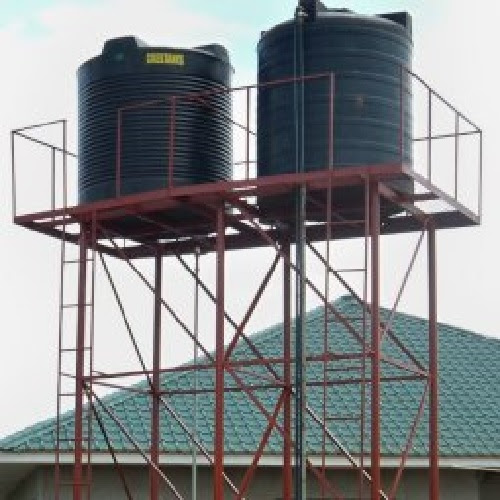
In Nigeria the norm for water is to pump water from your well into a holding tank and gravity feed it into your house. The more complicated systems use multiple pumps /tanks
Nuarro Lodge: Sustainable and responsible tourism in Mozambique
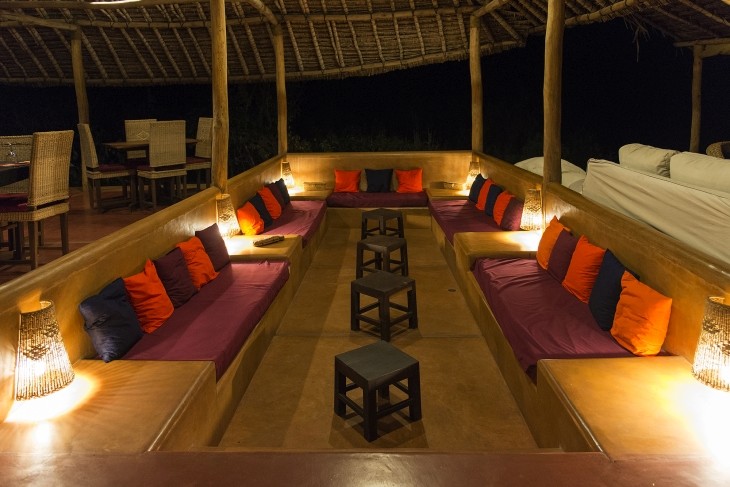
Behind the scenes, powering the Nuarro Lodge lighting shown above, is a newly upgraded Victron Energy hybrid-30kVA, 3-phase system with 38kWp of solar power. The Lodge though is but one part of the Nuarro project that Victron Energy and their partner companies are involved with.
Pristine, off-grid and remote
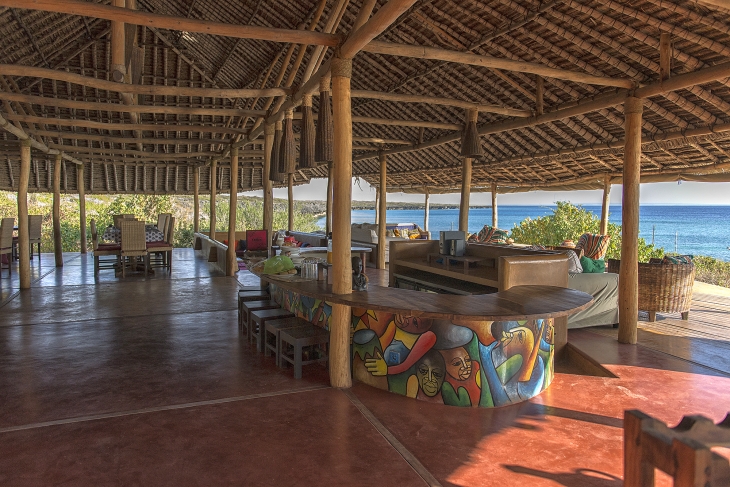
Nuarro Lodge, its associated chalets, activities and community based projects all form part of this award winning complex. Situated beneath the aqua blue skies of northern Mozambique, Nuarro is adjacent to unspoilt sands and the warm crystal clear coral reef waters of the Indian Ocean.
Nuarro is built from natural materials (by the local community) in an 800 hectare (8 sq km) environmentally sensitive concession area of the Baixo da Pinda peninsula. In the words of the company
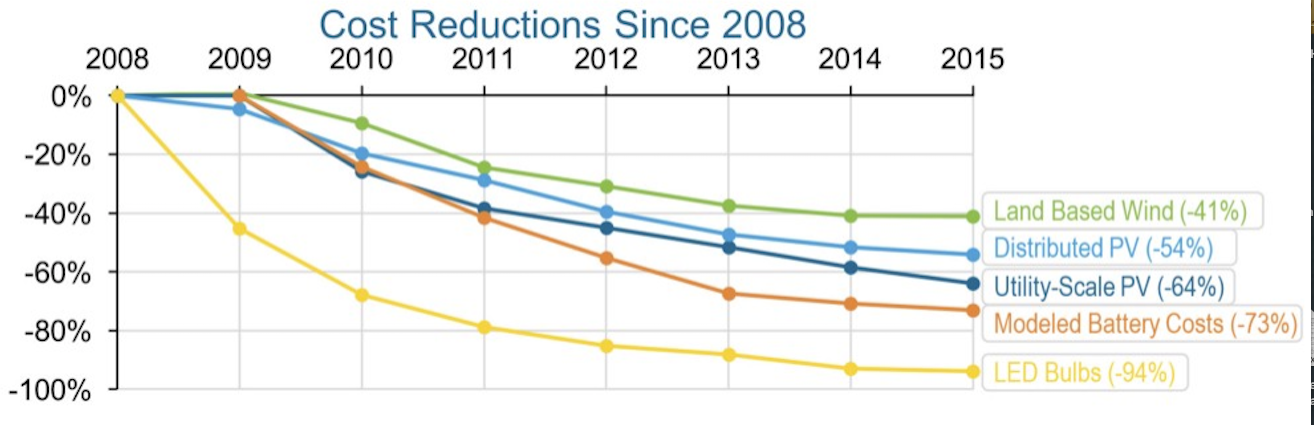
While investments in renewable energy slumped last year, a big drop in unsubsidized costs for new wind and solar power installations indicated that they remain popular energy alternatives.
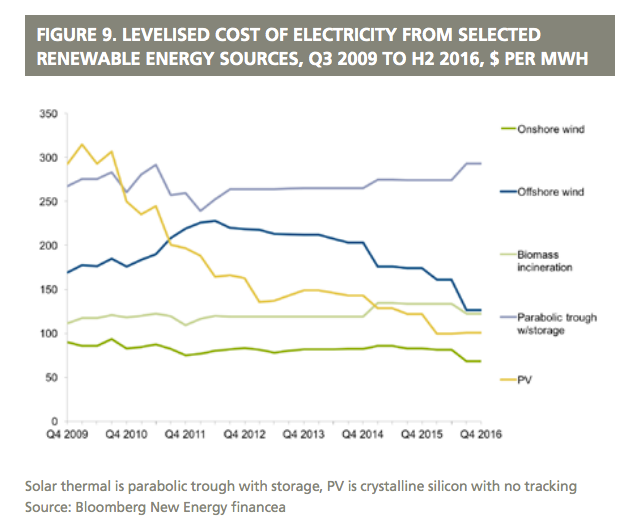
Last year, the average “levelized cost” or total cost of generating power from solar worldwide dropped 17% percent, onshore wind costs dropped 18% and offshore wind turbine power costs fell 28%, according to a new report from the United Nations and Bloomberg New Energy Finance (BNEF).
Department of Energy
“Well, after the dramatic cost reductions of the past few years, unsubsidized wind and solar can provide the lowest cost new electrical power in an increasing number of countries, even in the developing world — sometimes by a factor of two,” Michael Liebreich, chairman of the Advisory Board at BNEF, said in the report.
The average capital cost for solar power projects of new construction in 2016 was 13% lower than in 2015, while for onshore wind the drop was 11.5% and for offshore wind, 10%.
UN/BNEF
“It’s a whole new world: even though investment is down, annual installations are still up; instead of having to subsidize renewables, now authorities may have to subsidize natural gas plants to help them provide grid reliability,” Liebreich said.
Last year, more gigawatts of solar power were added (75GW) than of any other technology for the first time. Trailing behind solar, in order of net gigawatts installed, were wind, coal, gas, large hydroelectric, nuclear and biomass.
Renewable energy accounted for 55% of new worldwide power last year, or a total of 138.5 gigawatts (GW). That compares with 127.5GW of new renewable energy in 2015; and renewable power installed in 2016 was done so at a cost 23% lower than 2015, the report showed.
UN/BNEF
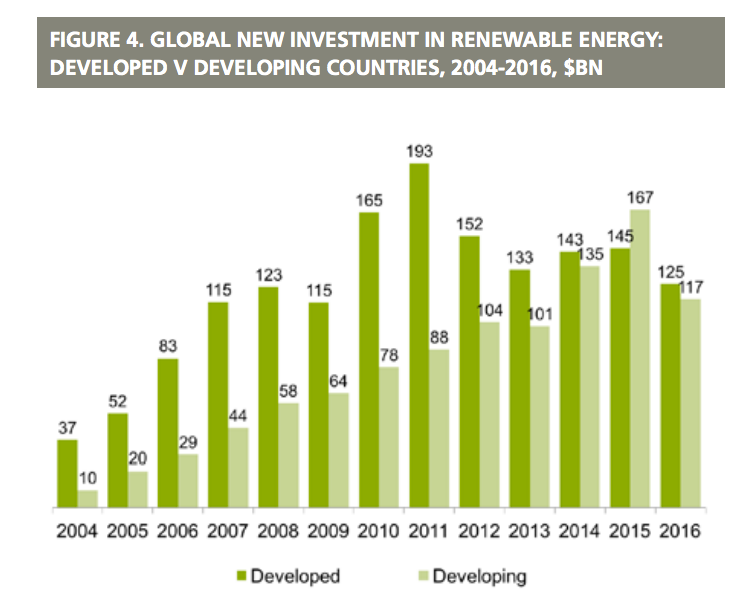
Since 2010, the dollars committed per year to new renewable energy worldwide — excluding hydroelectric — have increased roughly five-fold, and have since oscillated between $234 billion and $312 billion, the report said.
“A major reason why installations increased, even though dollars invested fell, was a sharp reduction in capital costs for solar photovoltaics, onshore and offshore wind,” the report said.
At the same time, because of the drop in prices, last year, the overall investment in renewable energy plummeted 23% to $241.6 billion from the record established in 2015; it was the lowest total investment since 2013.
TargetRooftop solar panels on a Target store in Greenville, S.C.
Investment in new renewables capacity was roughly double that in fossil fuel generation in 2016, for the fifth successive year. The proportion of global electricity coming from renewable sources rose from 10.3% in 2015 to 11.3% in 2016, and prevented the emission of an estimated 1.7 gigatons of CO2.
Smart energy hardware such as smart meters, energy storage sources and associated IoT technologies also saw record investments last year. Asset finance for smart meters and energy storage, plus equity raised for specialist companies in energy efficiency, storage and electric vehicles, totalled a record $41.6 billion last year. That was up 29%.
In the U.S., utilities and private energy companies are increasingly investing in smart grid technology, including microgrids.
Duke Energy/Schneider ElectricA rendition displaying what a microgrid would contain.
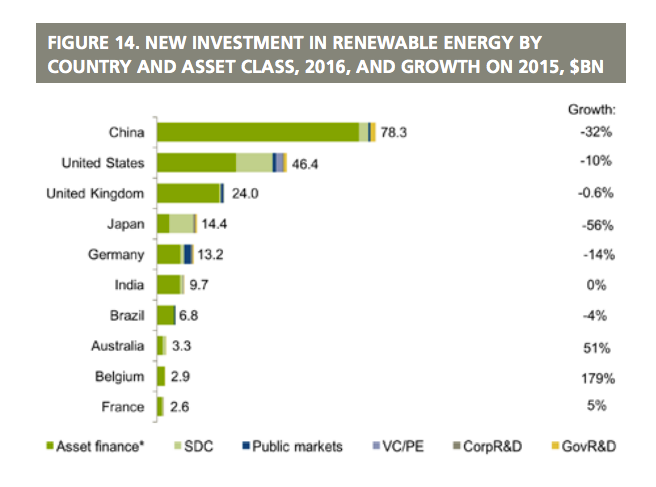
China now leads the world in renewable investments
China is now the world leader in domestic investments in renewable energy. In 2015, it invested $103 billion, a 17% increase in spending year over year — twice as much as the U.S. invested. The country is now actively pursuing a “global” strategy, which aims for a Pan-Asian development approach.
In 2016, China increased its foreign investments in renewable energy by 60% year over year to $32 billion, according to a January report from the Institute for Energy Economics and Financial Analysis (IEEFA).
UN/BNEF
China will install 36% of all global hydro electricity generation capacity from 2015-2021, according to the report. During the same period, it will install 40% of all worldwide wind energy and 36% of all solar, the IEEFA said.
“A change in leadership in the U.S. is likely to widen China’s global leadership in industries of the future, building China’s dominance in these sectors in terms of technology, investment, manufacturi犀利士 ng and employment,”
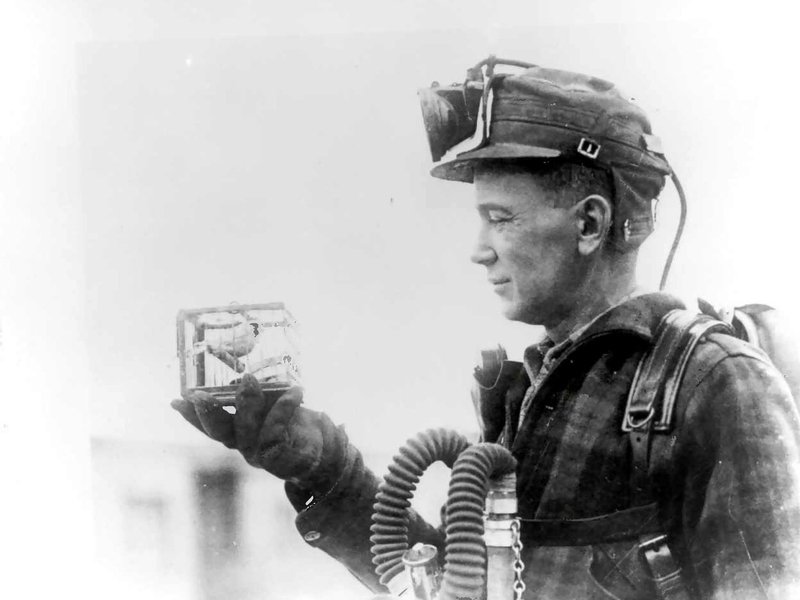
At the turn of the century before carbon monoxide monitors and detectors were developed, miners used sentinel birds. The most common and effective was the canary. If dangerous gases such as carbon monoxide collected in the mine, the gases would kill the canary before killing the miners, thus providing a warning to exit the tunnels immediately. Caged Canary Smithsonian Magazine
A few weeks ago, Port Harcourt was in the news, soot was falling from the sky and coating everything it fell on. You had black soot on clothing, buildings, cars and as you can imagine, people were breathing it in. Governor Wike responded by shutting down a bitumen plant. The soot is still falling, is it more that just one plant?
On Wednesday, I was in Port Harcourt and I noticed that all the air conditioning units at the hotel I stayed in were coated with a black oily substance around the fan shroud. The walls and the roofs were black or had black coating on them. What struck me was the faint smell of diesel in the air. I attributed it to the large generator the hotel used.
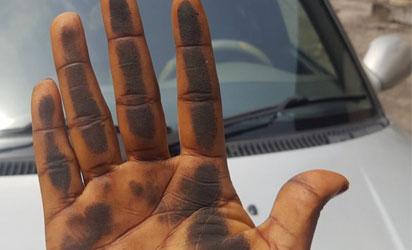
The next morning, as I came out of my hotel room, I saw employees with face masks and orange suits. I was like is it really that bad, until I saw the man with the canister that held pesticides. I took a walk from my hotel to my clients office and noticed the absence of sunshine. It was drizzling and overcast and you still had that faint smell of diesel. For lunch my client and I went to his house. I asked to see the Victron Quattro 8000 we had installed for him. Every thing was covered in black soot. My hands were black from touching the inverter and batteries, like in the picture below. Soot covered hands
My client explained that they wash everything, the walls, the windows, the walkways daily and yet by noon everything is covered in soot. We went back to his office and I could still smell diesel. His generator was not on (he has solar power), he had not made a recent purchase of diesel and the location of the fuel tanks was a distance from where we were. When I mentioned the smell of diesel to him, he noticed it too. It had become a part of the environment that people stopped noticing.
I can’t begin to imagine the health effects that will come from people breathing in all these particulates. I can’t imagine the ecological destruction that this will bring to all the marshes and creeks. I can’t imagine the number of wildlife and life stock that will be damaged and killed by this.
Nigeria is a country that is heavily dependent on self generation using diesel and poor quality fuels. Do we see this happening in other parts of Nigeria? Is Port Harcourt that canary in the coal mine? As Port Harcourt goes so will Nigeria? Is the a warning or taste of things to come all across Nigeria? What are the consequences for Nigeria? We already have very polluted rivers, landfills that are full of toxic materials and now our air is not breathable. What does this mean for the future of our children and grandchildren? Are Nigerians about to experience what China went through 3 years ago. Pollution so crippling it made your eyes water. People needed face masks to breathe. The air was so thick with pollution you could not see the person in front of you. Rivers turned green from too many chemicals.
What way forward NIGERIA? What does the future hold? I see opportunity do you?
This comment was treated with comic disbelief by the grandmother, when her 8 year old grandchild told her that they had constant electricity. Grandma in her sixties thought back to better days in the 70’s when electricity supply was constant in Nigeria. She remembered the 80’s where even though it was on everyday, she suffered periodic blackouts. And then came the late 90’s and 2000’s. One was considered lucky when the gods at Nepa graced them with electricity.
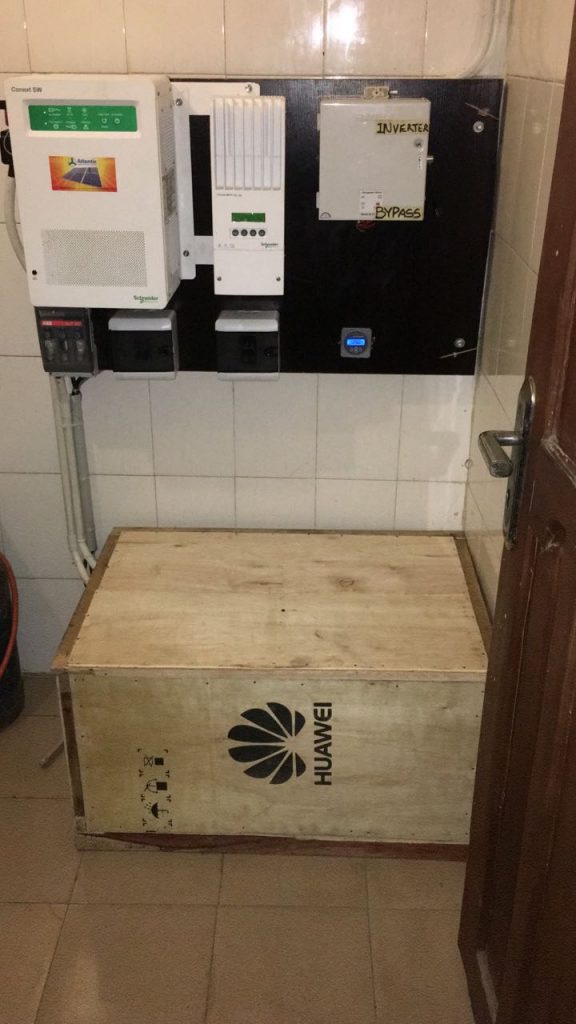
The offending system
She quickly shooed the little child off the phone and asked to speak to her son. Her son reaffirmed that indeed they had power 24 hours a day 7 days a week. Yes his child was being truthful. Her son could not have moved out of Nigeria without telling him. Had he said something and she forgot, maybe she was getting too old. Grandma looked at her phone and it showed her son MTN phone number. As her confusion grew, the son explained that he had invested in solar and he was now enjoying the benefits that people in more organized societies enjoyed.
This conversation had me thinking about my children and their first visit to Nigeria in 1994. They were excited to come home for the first time. They had left a cramped one bedroom apartment in West Paterson, NJ to come to a house in Nigeria. They woke up every morning and the first thing they did was go outside to play. Something they could not do in New Jersey. They had uncles and aunties and household help that fawned over them. My mother even bought a goat that they talked to every day. People were saying that these American children were stupid to talk to a goat. The goat followed them around the compound and seemed to have a relationship going.
Then one day it happened. The lights went out. My boys were so excited when we brought out candles, because it felt as if they were going camping. Can you imagine lighting candles today?
Fast forward to 2016. My youngest came to visit last year and he enjoyed rationed electricity. We had power but we rationed it. We had a small solar power installation with more batteries and not enough panels to charge the batteries. We had lights but could not enjoy the fans at night because we did not put enough charge into our batteries. On his next visit later in 2017 he will have 24/7 refrigeration, day time AC and a fan through the night.
We have been told since my primary schools days that the power situation will be fixed. Every administration has declared a power emergency and yet we are no closer to Nirvana.
In 2014 I installed my first system, a Chinese manufactured 1.5 kw inverter with 200 AH in batteries. The inverter and batteries were junk. Later that year I purchased flooded batteries and a different inverter. I got better results, we could now power the fridge but I was not charging better. I purchased a Flex Max 60 amp charge controller, only to discover that I had junk panels. I imported new panels and my production leaped. We have been doing slow but incremental upgrades ever since. We went from 1 kw in panels to 2 kw. We went from 216 AH in batteries to 432 AH in batteries. I can run my freezer 24/7 now and the fridge during the day. Next phase is an additional 1500 – 2000 watts in panels, an additional charge controller and a small AC. We can take advantage of our day time production to keep the house or office cool.
Solar allows you to increase capacity over time. You start with what your budget can handle and then slowly increase till you get to where you are comfortable. It is important that you buy quality or you will suffer my fate.
You are your own utility company. Make the best of the opportunity.
The writer Mr. Christopher Onwuasoanya is the President of AWPS Renewable Energy, LTD in Lagos. He spends his time between Lagos and NJ where he lives with his wife and three sons. He does not remember the last time he used a generator. He has learnt to manage his power resources to ensure that he has power 24/7 365 days a week.
 AWPS Renewable Energy, LTD